Coffee Capsules: Everything You Need to Know (And a Few Things You Didn't)
Posted by Aromas Coffee Roasters on 6th May 2026
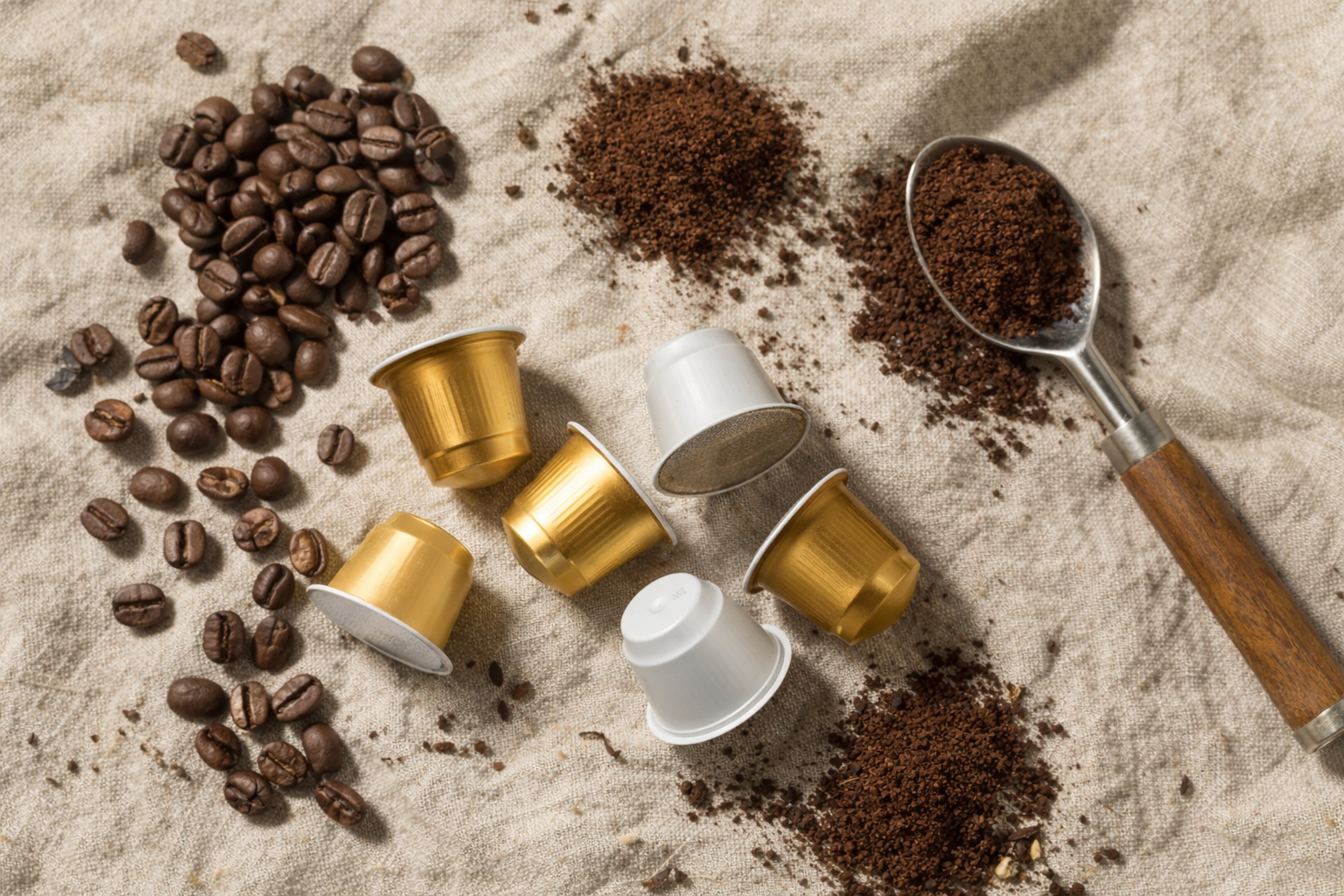
Coffee Capsules: Everything You Need to Know
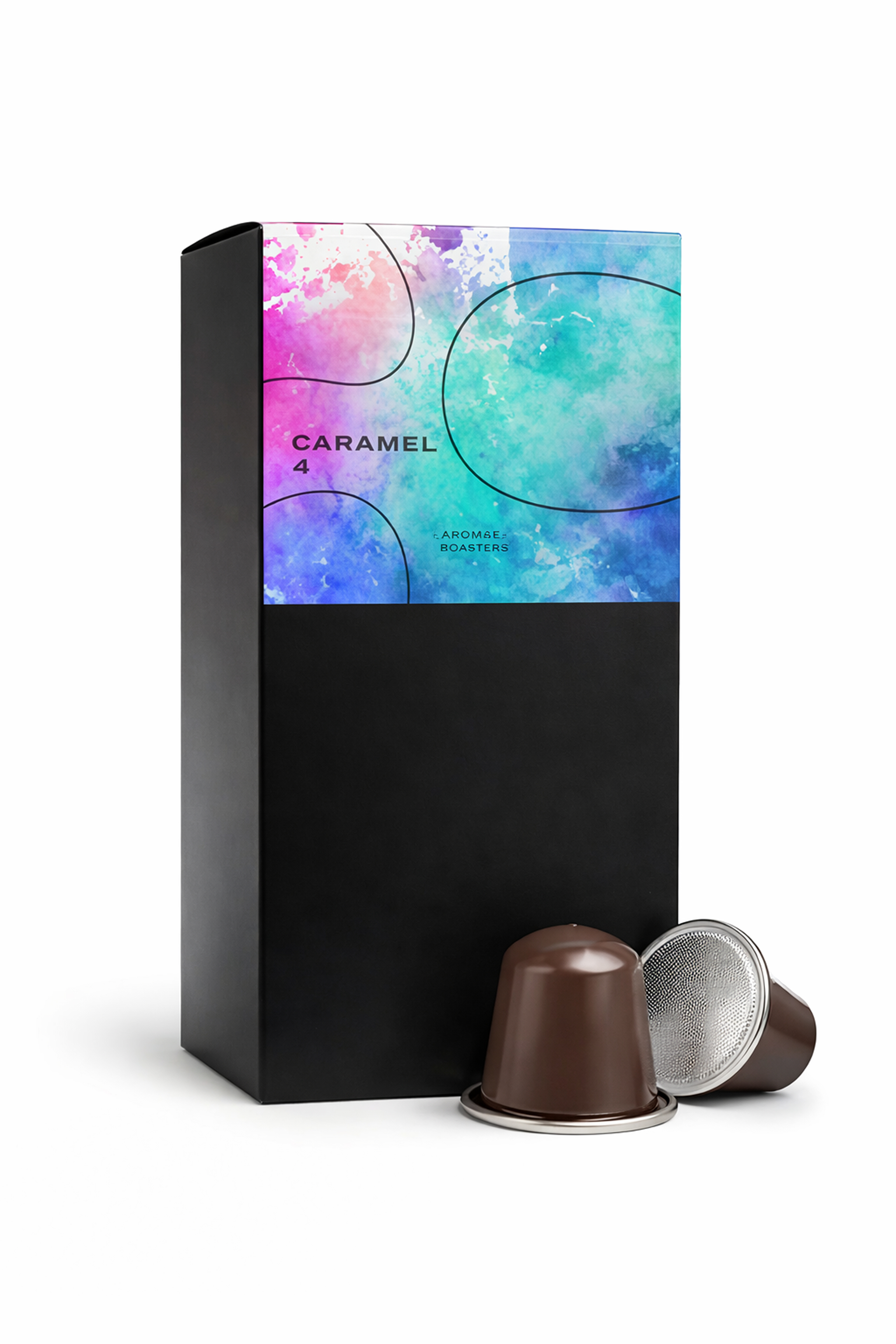
Capsule coffee has come a long way. What started as a convenience product aimed at office kitchens has turned into a genuinely capable way to make great coffee at home, and for a lot of people it's become the daily driver. But there's still plenty of confusion around how they actually work, what they're good for and where they fall short compared to a traditional machine. Aromas currently make our own coffee capsules in three blends: Black Label, Chicago Dark, and Caramel 4. To purchase our capsules, visit here.
Here's the full picture.
How Are Coffee Capsules Made?
It starts with the coffee itself. Freshly roasted beans are ground to a specific consistency suited for espresso extraction, which is finer than what you'd use for a plunger but coarser than Turkish coffee. That ground coffee is then precisely dosed, usually around 5 to 7 grams per capsule, and packed under controlled conditions to limit exposure to oxygen.
The capsule shell, typically made from aluminium or food grade plastic depending on the brand, is then sealed with a foil lid and flushed with nitrogen gas before sealing. That nitrogen flush is the key part. It pushes out the oxygen that would otherwise stale the coffee within days, which is how a capsule can sit in a box for months and still taste fresh when you use it.
The sealed capsule is then quality checked, boxed and sent out. It's a surprisingly precise process that, when done well, locks in a consistent flavour profile every single time.
At Aromas, the capsule range currently includes three blends. The Chicago Dark is a bold, full bodied roast with chocolate and earthy notes, built for people who like their coffee strong. The Black Label (Heritage Blend) is the crowd pleasing classic, well balanced and versatile. The Caramel 4 is a naturally sweeter, smooth blend that works brilliantly on its own or with milk. All three are Nespresso compatible and come in 10 packs.
How Does a Capsule Machine Actually Work?
When you insert a capsule and press the button, the machine punctures the foil top with a needle and simultaneously pierces the base of the capsule. Hot water is pushed through at high pressure, usually around 15 to 19 bar depending on the machine, forcing it through the tightly packed coffee grounds and out the bottom into your cup. The whole process takes about 25 to 30 seconds.
The pressure is what creates the crema, that golden foam on top of an espresso that carries a lot of the aroma and flavour. It's also what extracts the oils and compounds from the coffee that make it taste like espresso rather than just strong filtered coffee.
Capsule vs Traditional Espresso Machine: What's the Real Difference?
This is the question most capsule owners eventually ask, usually after tasting a really good espresso at a café.
The honest answer is that a quality espresso machine with freshly ground beans, dialled in correctly, will produce a better cup. The reasons come down to freshness, grind control and extraction flexibility. With a traditional machine you can adjust the grind, dose, tamp pressure and extraction time to dial in exactly the flavour you want. You're also working with coffee that was whole beans until 30 seconds ago, which makes a meaningful difference to aroma and complexity.
Capsules sacrifice some of that control and freshness in exchange for consistency and convenience. The grind happened at the factory, the dose is fixed and the machine does everything automatically. For most people at home, that tradeoff makes complete sense. You're not going to produce a worse cup than a badly calibrated home machine with stale pre-ground beans, which is what a lot of people are actually comparing against.
Where capsules genuinely struggle is with milk based drinks. The espresso shot from a capsule is slightly shorter and sometimes less intense than a pulled shot, so in a large latte or flat white the coffee flavour can get a bit lost. Running a lungo (longer extraction) rather than an espresso can help with this.
The other real difference is flexibility. With beans and a grinder you can explore single origins, different roast profiles and brew styles. Capsules are inherently limited to what's in the range.
How to Get the Most Out of Your Capsules
A few simple things make a noticeable difference to the final cup.
Always use filtered water if you can. The water makes up more than 90% of what's in your cup, so water quality matters more than most people realise. Hard tap water with a lot of minerals can dull the flavour and also build up scale inside your machine faster.
Preheat your cup. Run a shot of hot water through the machine before you brew to warm the cup up. Coffee loses temperature quickly in a cold cup and that affects how it tastes.
Match the capsule to the drink you're making. The Chicago Dark is best pulled as a short espresso or ristretto where the intensity shines. The Black Label works well across everything from a short black to a flat white. The Caramel 4 is particularly good pulled slightly longer over ice.
Creative Ways to Use Your Capsules
The obvious uses are covered, but here's where it gets interesting.
Iced latte: Pull a double shot directly over a glass full of ice, then top with cold milk. The rapid chilling from the ice locks in the flavour and you get a café style iced latte in under two minutes.
Coffee tonic: Pull an espresso over ice and top with tonic water. Add a slice of orange if you're feeling ambitious. It sounds odd but it genuinely works, especially with the Chicago Dark.
Affogato: Pour a hot shot directly over a scoop of vanilla ice cream. The contrast of hot coffee and cold ice cream is one of the great simple pleasures, and it takes about 45 seconds to make.
Coffee syrup for cocktails or baking: Pull a lungo shot and reduce it in a small saucepan with an equal amount of sugar until it thickens into a syrup. It keeps in the fridge for two weeks and works in tiramisu, chocolate cake, espresso martinis and stirred through warm milk.
Cold brew style concentrate: Some people run a capsule on the smallest shot setting into a cup of cold water and ice for a quick approximation of cold brew. It's not quite the same process but it produces a smooth, less bitter result that works well on a hot afternoon.
Flavoured capsule latte: Run the Caramel 4 capsule as a short shot, add a pump of Aromas Hazelnut or Vanilla syrup to the cup first, then top with steamed or frothed milk. You end up with something that tastes like it came from a specialty café and costs about a dollar fifty to make.
The Aromas capsule range is Nespresso compatible and available in the Chicago Dark, Black Label and Caramel 4 blends, all at $8.50 for a 10 pack. Purchase here.