How to Choose the Right Roasted Coffee Beans for Your Brew Method
Posted by Aromas Coffee Roasters on 30th Sep 2026
How to Choose the Right Roasted Coffee Beans for Your Brew Method
Not all coffee beans are created equal — and neither are all brew methods. The beans that make a rich, velvety espresso can taste flat and underwhelming in a pour-over, while beans perfect for a French press might turn bitter and over-extracted in an espresso machine. If you've ever wondered why your coffee doesn't taste quite like it does at the café, the answer often comes down to matching your beans to your brewing method.
Here's how to choose the right roasted coffee beans for however you brew at home.
Why Brew Method Matters
Different brewing methods extract flavour from coffee at different rates and temperatures, using different grind sizes and contact times. A bean that shines under high-pressure, short-contact espresso extraction won't necessarily perform the same way when steeped slowly in a French press for four minutes. Roast level, origin, and processing method all interact with your brew method to shape the final cup — so getting the pairing right makes a noticeable difference.
Espresso: Go Bold and Balanced
Espresso concentrates flavour, so beans with a medium-dark to dark roast tend to work best — they hold up under pressure and produce that classic crema without turning sharp or sour. Look for blends with low acidity and a fuller body, often featuring notes of chocolate, caramel, or nuts. Single-origin Brazilian or Colombian beans, or a well-balanced house blend, are reliable choices for espresso machines.
Tip: If your espresso tastes thin or sour, try a slightly darker roast or a finer grind.
Filter and Pour-Over: Let the Origin Shine
Pour-over methods (V60, Chemex, drip) use a slower extraction and lighter contact, which lets more delicate, nuanced flavours come through. This is where light to medium roasts and single-origin beans really shine — think bright, fruity Ethiopian beans or floral, tea-like Kenyan coffee. These roasts preserve the origin characteristics that get muted in darker roasts.
Tip: If your pour-over tastes weak or watery, try a slightly finer grind or a touch more coffee.
French Press: Full-Bodied and Forgiving
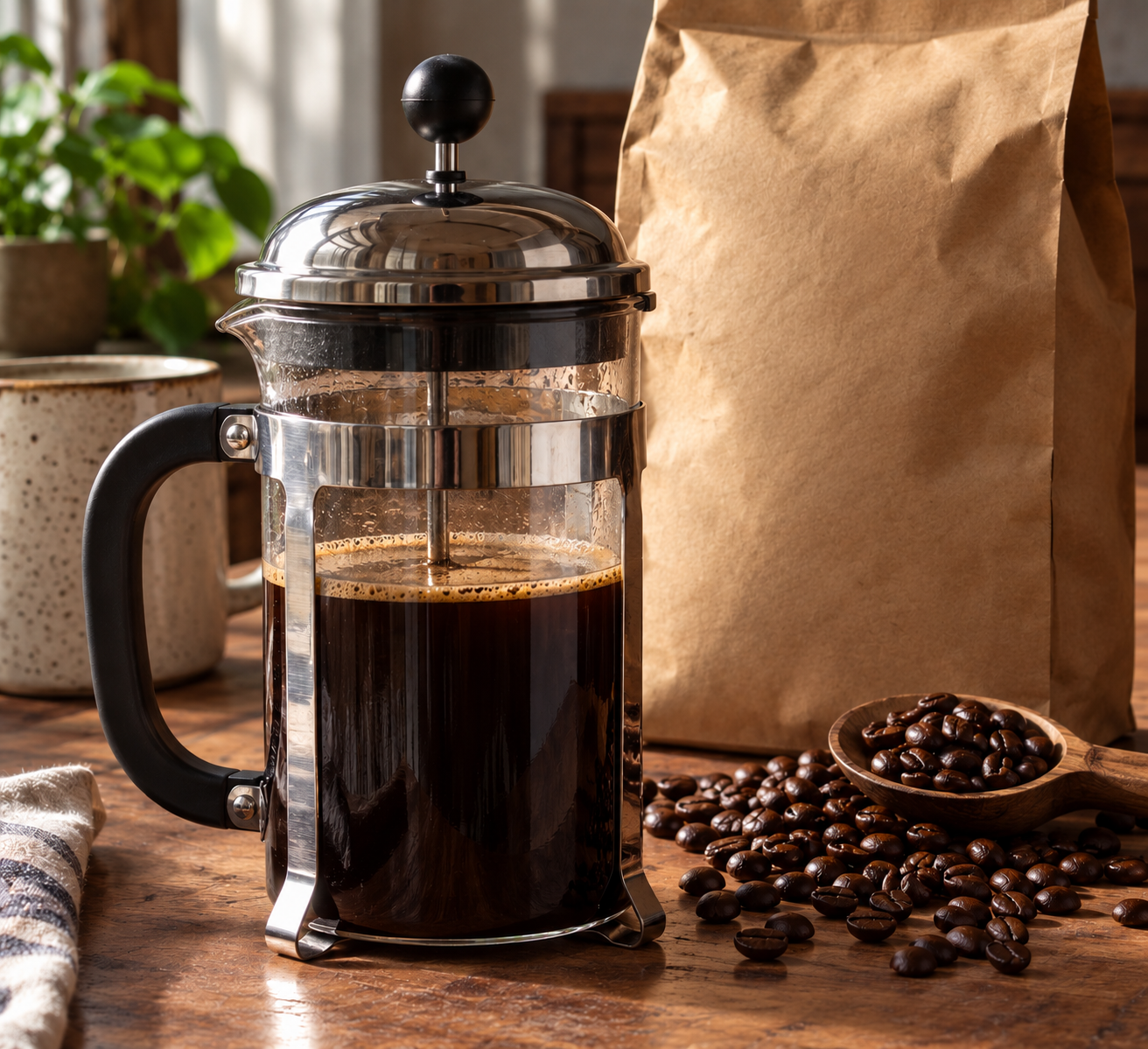
French press brewing uses full immersion, giving you a heavier-bodied, more textured cup. Medium to medium-dark roasts tend to perform best here, offering a good balance of body and flavour without becoming overwhelming. This method is fairly forgiving, so it's a great way to experiment with different origins and roast levels to find what you like.
Tip: Use a coarse grind to avoid sediment and over-extraction.
Cold Brew: Smooth and Low-Acid
Cold brew's long, slow steep (12–24 hours in cold water) naturally produces a smoother, lower-acid cup regardless of bean choice — but medium to dark roasts with chocolatey or nutty notes tend to complement the process best. Avoid very light, delicate roasts here, as their subtler notes can get lost in the extended steep time.
A Quick Reference
| Brew Method | Best Roast Level | Look For |
|---|---|---|
| Espresso | Medium-dark to dark | Low acidity, full body, chocolate/nutty notes |
| Pour-over/Filter | Light to medium | Bright acidity, floral/fruity single origins |
| French Press | Medium to medium-dark | Full body, balanced flavour |
| Cold Brew | Medium to dark | Smooth, chocolatey, low bitterness |
Freshness Still Comes First
No matter which roast level you choose, freshness matters more than almost anything else. Beans roasted within the last two to four weeks will always outperform older beans, regardless of how well-matched they are to your brew method. That's why we roast in small batches here in Brisbane and get beans to you as close to roast day as possible.
Find Your Match
Whether you're pulling shots at home or slow-brewing a pour-over on a lazy Sunday, choosing beans suited to your method is the easiest way to level up your coffee. Explore our range of freshly roasted beans and find the right match for the way you brew.